Marine & Barge Transportation
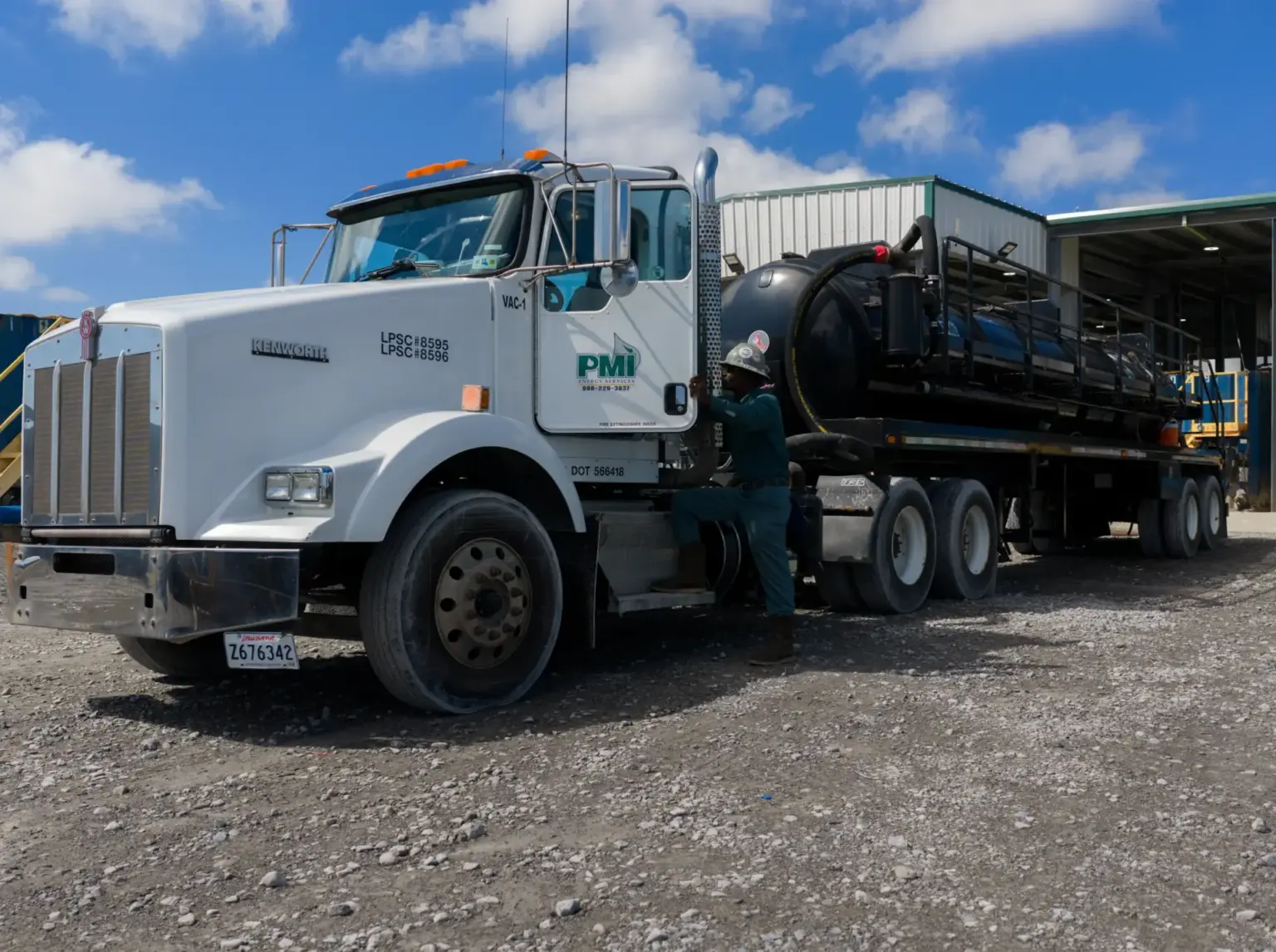
Boat cleaned and back to work, dockside at Fourchon.
PMI cleans OSV liquid mud and dry bulk tanks dockside at Port Fourchon, where three docks let us take more than one boat at a time. We are open 24 hours a day, 365 days a year.

The record
- 6Locations in Louisiana and Texas
- 300+Employees across the company
- 24/7/365Dispatch and response
- 50+Years in operation
The problems this ends
Every hour a boat sits alongside is an hour it is not earning, and the cleaning is usually what the rest of the schedule is waiting on.
A tank still holding residue from the last cargo stops the next job before it starts, and the dock is a bad place to find that out.
Wash water and sludge hauled off the dock turn a cleaning bill into a disposal bill with a paper trail somebody has to defend.
When your own disposal outlet goes down, the water keeps coming and the vessels keep arriving on the same schedule they always did.
A contractor whose people lack TWIC cards or dock access cannot start, no matter what equipment is sitting on the trailer.
Curated for this industry
Services for Marine & Barge Transportation
We pull the residue, handle the waste paperwork, and process the wash water on site with our electro catalytic advanced oxidation unit instead of trucking it off the dock for disposal. Barge tanks are not our core work, but we have cleaned more than 50 of them and we will take the job when a customer asks. For barge operators we also handle the water side, including one job run straight through a customer's own disposal facility outage with no downtime.
On the job
Recent work
A Gulf Coast midstream operator lost its own disposal facility to an outage and still had barge wash water to move. PMI processed it, and the operator took no downtime. For an offshore operator we processed the water out of one tank that arrived at 250 ppm hydrogen sulphide and left at 40 ppm. At Port Fourchon we have recycled the wash water from OSV tank cleaning for more than seven years, and that has saved customers over $7 million against hauling and disposal.
Why PMI
What changes when PMI runs the job
Two things decide how a cleaning job actually goes: whether anyone has to go inside, and what happens to the water afterwards. Both are answered before the crew mobilizes.
15,000+
The record is not a startup's
Vessels and barges cleaned, plus 5,700+ platforms and 346 rigs and drillships turned around. New to your site, not new to the work.
Zero entry
Automation the incumbents do not run
RoosterEX cleans tanks up to 120 ft in diameter with personnel outside the shell, proven on heavy paraffin. The entry you do not authorize is the exposure you do not carry.
0 trucks
Water that never leaves your site
EC-AOP treats wash water at the tank and returns it to the wash. No competitor on the Gulf Coast offers this inside a cleaning scope.
Questions we get
Marine & Barge Transportation FAQs
Do you clean OSV tanks?
Yes. Liquid mud and dry bulk tanks are core work for us at Fourchon.
Do you clean barge tanks?
Yes, on request. We have cleaned more than 50 barge tanks. It is not core work for us the way OSV tanks are, so ask and we will quote it.
Can you take more than one boat at once?
Yes. We run three docks at Port Fourchon, so multiple vessels can be alongside at the same time.
Can you work nights and weekends?
Yes. We are open 24 hours a day, 365 days a year, because boats do not arrive on a schedule.
What happens to the wash water?
We process it on site. Our water reclamation unit uses electro catalytic advanced oxidation to clean the water for reuse rather than sending every gallon out by truck.
Can you take our wash water when our own disposal outlet is down?
Yes. We have done exactly that for a midstream operator during an outage at their disposal facility, and they lost no time over it.
Do you issue a gas-free or marine chemist certificate?
No. We test the atmosphere ourselves with a four-gas meter, reading oxygen, carbon monoxide, hydrogen sulphide and LEL, and that covers our own entries. A gas-free or marine chemist certificate has to come from a qualified marine chemist, and we will say so up front rather than let you find out at the gate.
Are your people TWIC-qualified?
Yes, along with general safety, confined space entry and confined space rescue training.
How fast can you mobilize?
Usually within 24 hours.
Tell us when the boat is due in.
Send the vessel, the tank count and what was in them last. Dispatch answers 24/7, which is when boats actually show up.