Remediation & Abandonment
One crew from the last barrel out to the close-out file.
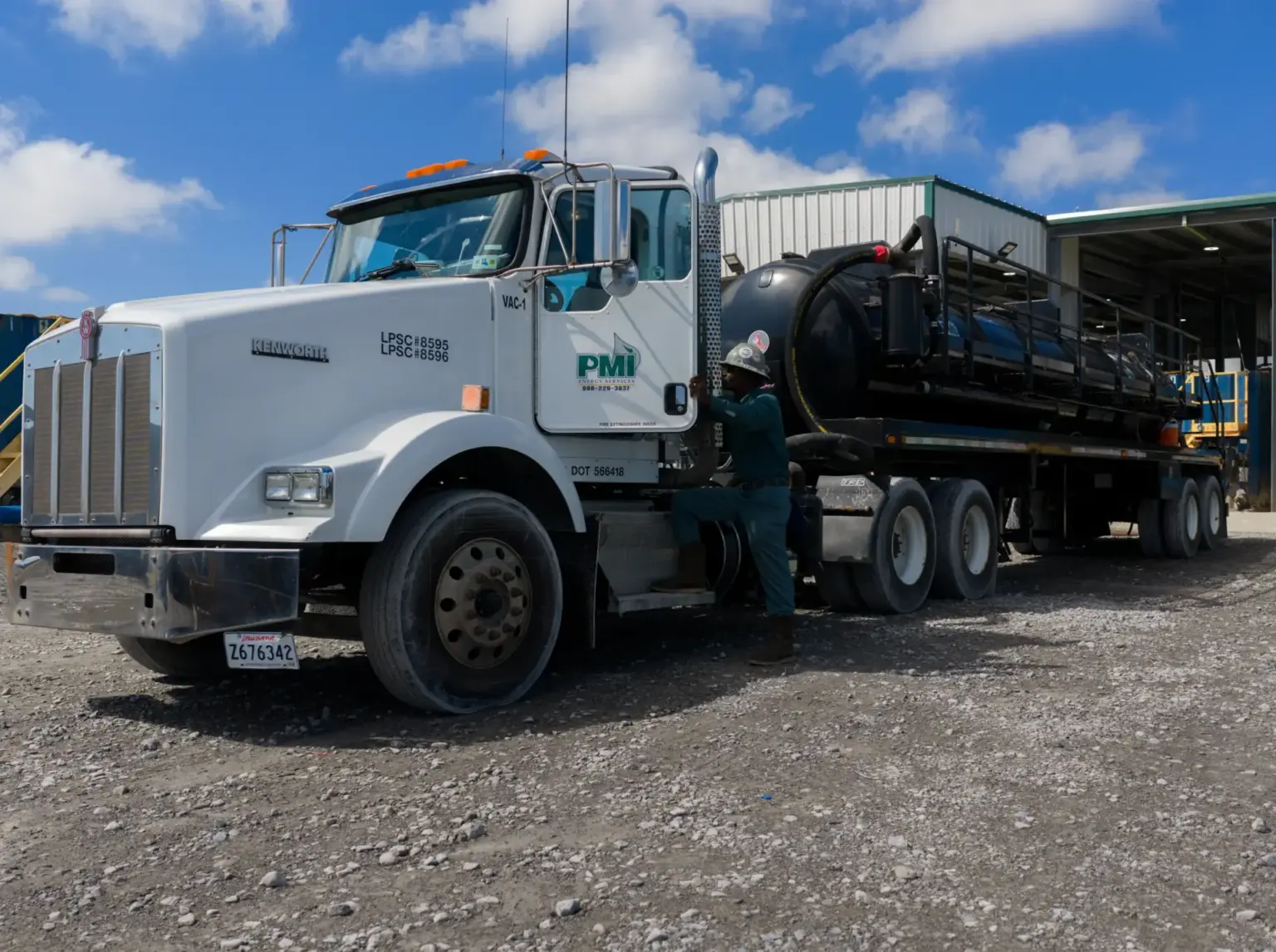
PMI cleans up and closes out assets that are coming out of service, pipelines above all, and remediates and restores the ground they leave behind.
The record
- 3,000+Projects completed
- 7States worked
- 50+Years in operation
- 95 to 97%Flush water reclaimed on site
The problems this ends
A line that stopped flowing years ago, now past the state’s out-of-service clock.
A property sale stalled because the buyer will not take on the pipe under the dirt.
Retirement obligations still on the books for assets nobody has touched since.
Five contractors on one closure, each waiting on the one before it.
Flush water leaving by vacuum truck, load after load, at haulage and disposal rates.
A close-out file with holes in it, found during an audit instead of before one.
Scope of work
What you get
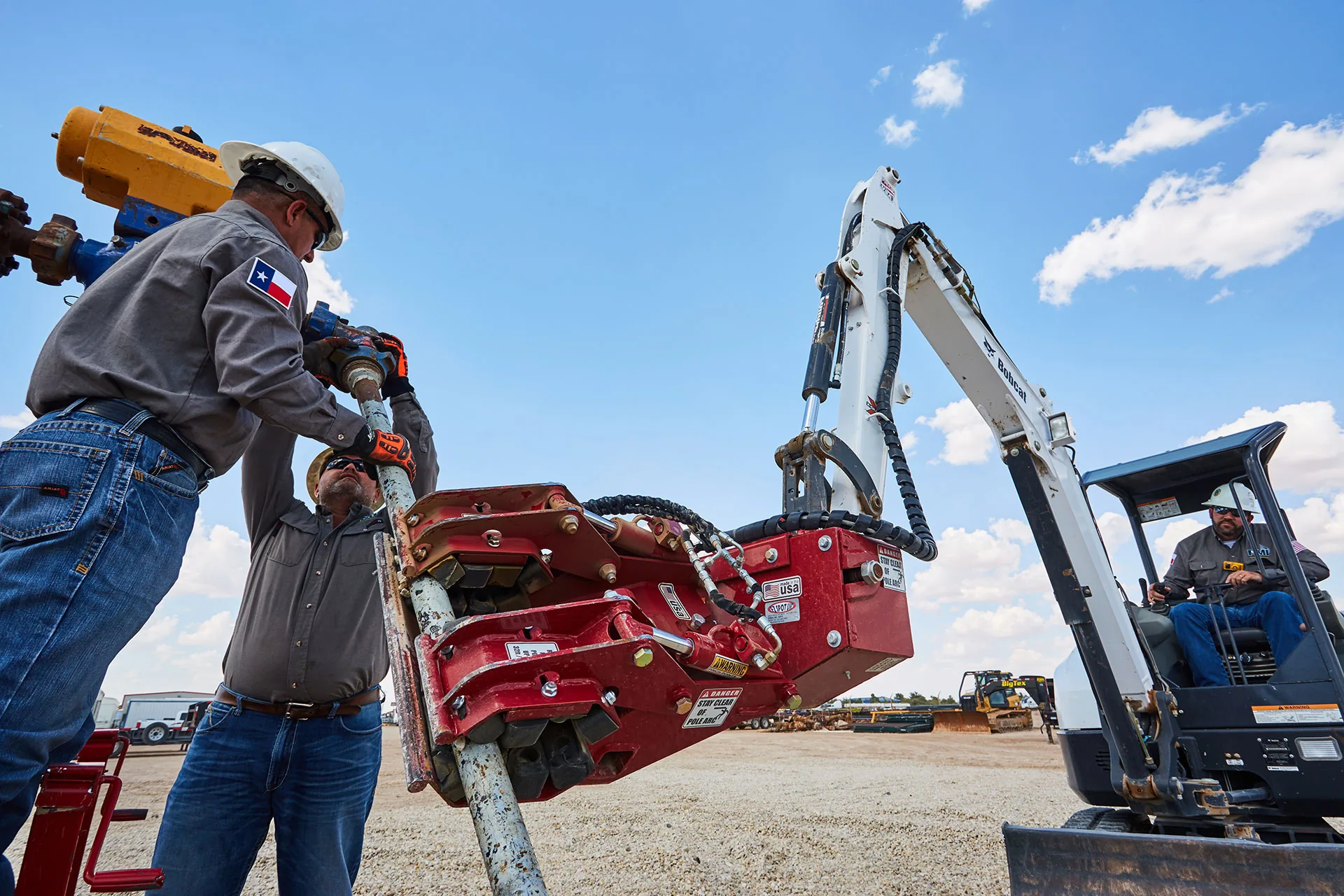
On a pipeline, our crews flush the line until the hydrocarbons are gone, screen it for NORM before anything is cut, cold cut and segment it, seal the ends, grout the crossings that need it, put the right-of-way back, and hand you the file the regulator asks for. The soil work stands on its own too, wherever the impact sits.Remediation and abandonment are one job here because they are one job in the field: the mechanics leave the asset inert, the environmental work leaves the dirt and the water clean. Our team has done both for more than 50 years, mostly on the Gulf Coast and in the Southwest.
Pigging and purging
Mechanical, brush or foam pigs driven by water, air or nitrogen push out bulk fluids and scrape off paraffin, scale and residue.
Chemical flushing
Surfactant sweeps strip the hydrocarbon film, run and re-run until the line meets the standard your project is held to.
NORM screening before the cut
Old pipe scales up with naturally occurring radioactive material, so our licensed people survey it first and keep contaminated joints out of the scrap.
Cutting and segmenting
Crews daylight the line at the permitted intervals, at property boundaries and at water crossings, then cold cut so there is no ignition source.
Capping and grouting
Ends sealed with welded caps or blind flanges; crossings under highway, rail and sensitive ground filled with cellular grout so no void is left.
Right-of-way soil work
Where the ditch turns up a pinhole leak or stained soil, our dirt crews excavate and treat it without the schedule stopping.
On-site water treatment
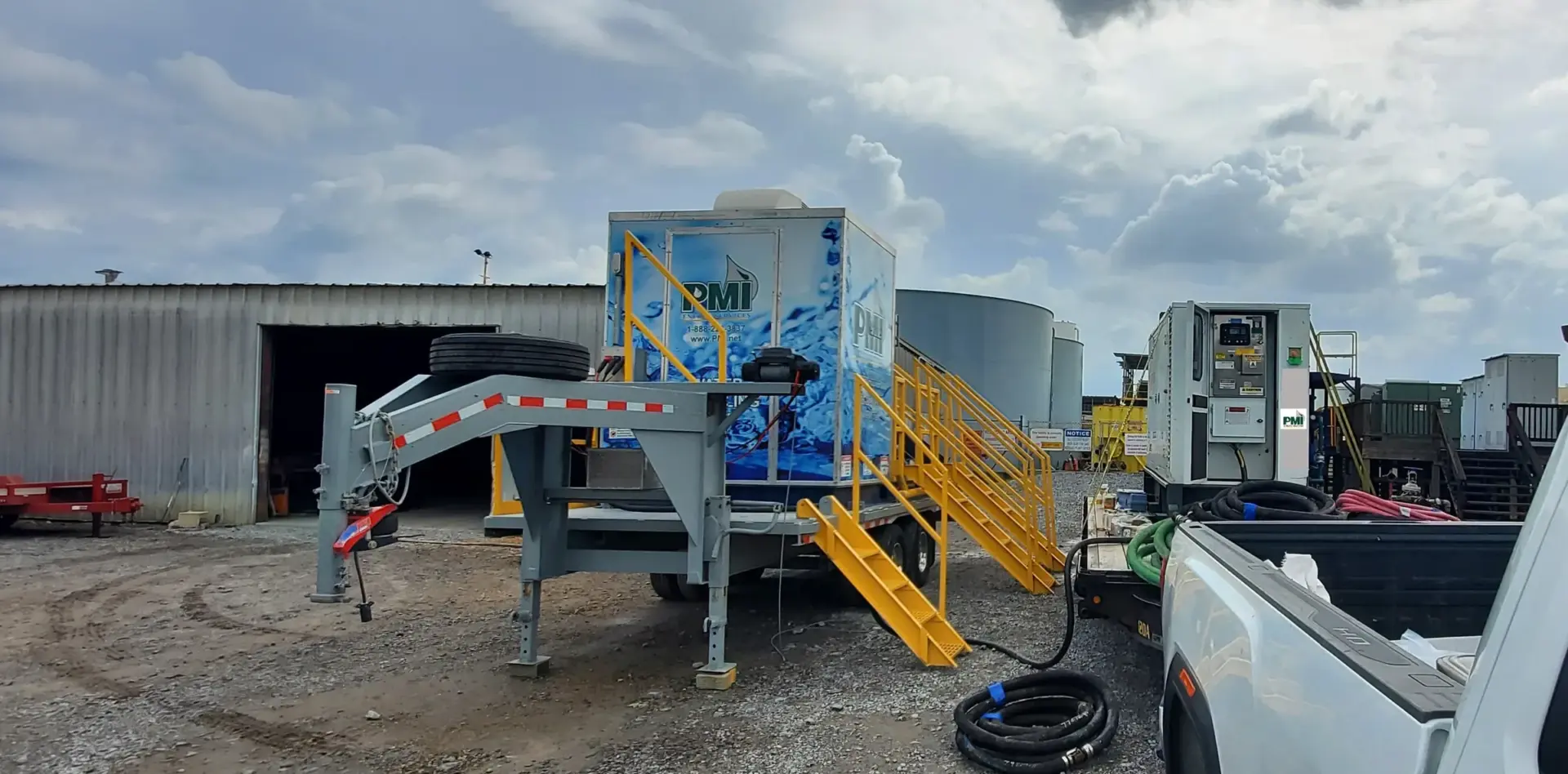
Flush water is treated at the job by our EC-AOP unit and put back into the next sweep instead of hauled off by the truckload.
Restoration and close-out package
Backfill with tested soil, regrade, seed, then manifests, purge records, grout logs and lab results in one file.
Equipment on this service
The technology doing the work
From the field
48 miles of flow line out of the ground
What we did
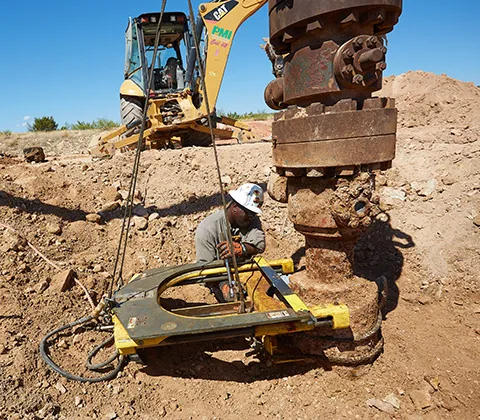
PMI removed 48 miles of flow line, closed 128 pits and decommissioned the tank batteries on one operator's field: cleaned, sheared, removed. Much of the line was NORM impacted, along with the well sites and the pits, so the survey came before the cutting and contaminated material stayed out of the scrap steel.
The situation
The operator was retiring a whole field, not closing one site. Everything had to come out, the radiological side had to be handled under a license, and crews were on it year-round.
The result
It ran more than five years. The line is out of the ground, the pits are closed, the batteries are gone, and the NORM work stayed with our own people instead of a subcontractor. It remains one of the largest jobs PMI has performed.
Questions we get
Remediation & Abandonment FAQs
Is it better to abandon a pipeline in place or take it out?
It depends on depth, location and what the easement says. Deep onshore lines are usually left in place, because digging one out costs more and disturbs more ground. Removal is for shallow lines, navigation hazards, and easements that require it.
How clean does the line have to be before it can be abandoned?
Clean enough that the agency with jurisdiction accepts it, which means no mobile hydrocarbons left inside. We pig and flush until the line meets that standard, then test and document it.
What keeps the abandoned line from collapsing later?
Under open ground a capped steel line holds on its own. Under a highway, rail crossing or levee, we grout the full length of the crossing, so no void is left to subside later.
Do you handle NORM in old lines, or does someone else?
We do, under our own Louisiana DEQ specific license and our own Radiation Safety Officer. Scale inside older pipe is frequently NORM, so the survey comes before the pipe is cut.
What happens to all the flush water?
It is treated at the job. Our EC-AOP unit reclaims 95 to 97 percent of it for the next sweep, and 3 to 5 percent leaves as inert solids. A few loads instead of a truck line.
Is remediation a separate job from abandonment?
We run them as one scope. Abandonment is the mechanical work: cutting, capping, grouting. Remediation is the environmental side: hydrocarbons out of the pipe, contamination out of the right-of-way. A closure that does one and not the other is unfinished.
What do we actually get at the end?
A close-out package: waste manifests, purge records, grout logs and independent lab results for soil and water, in one file. It is what you hand an auditor or a buyer two years later.
Tell us what is still in the ground.
Send the line, its size and length, what it last carried, and the date the closure has to be filed. Our team scopes the cleaning, the cutting and the paperwork as one job, and dispatch answers around the clock.