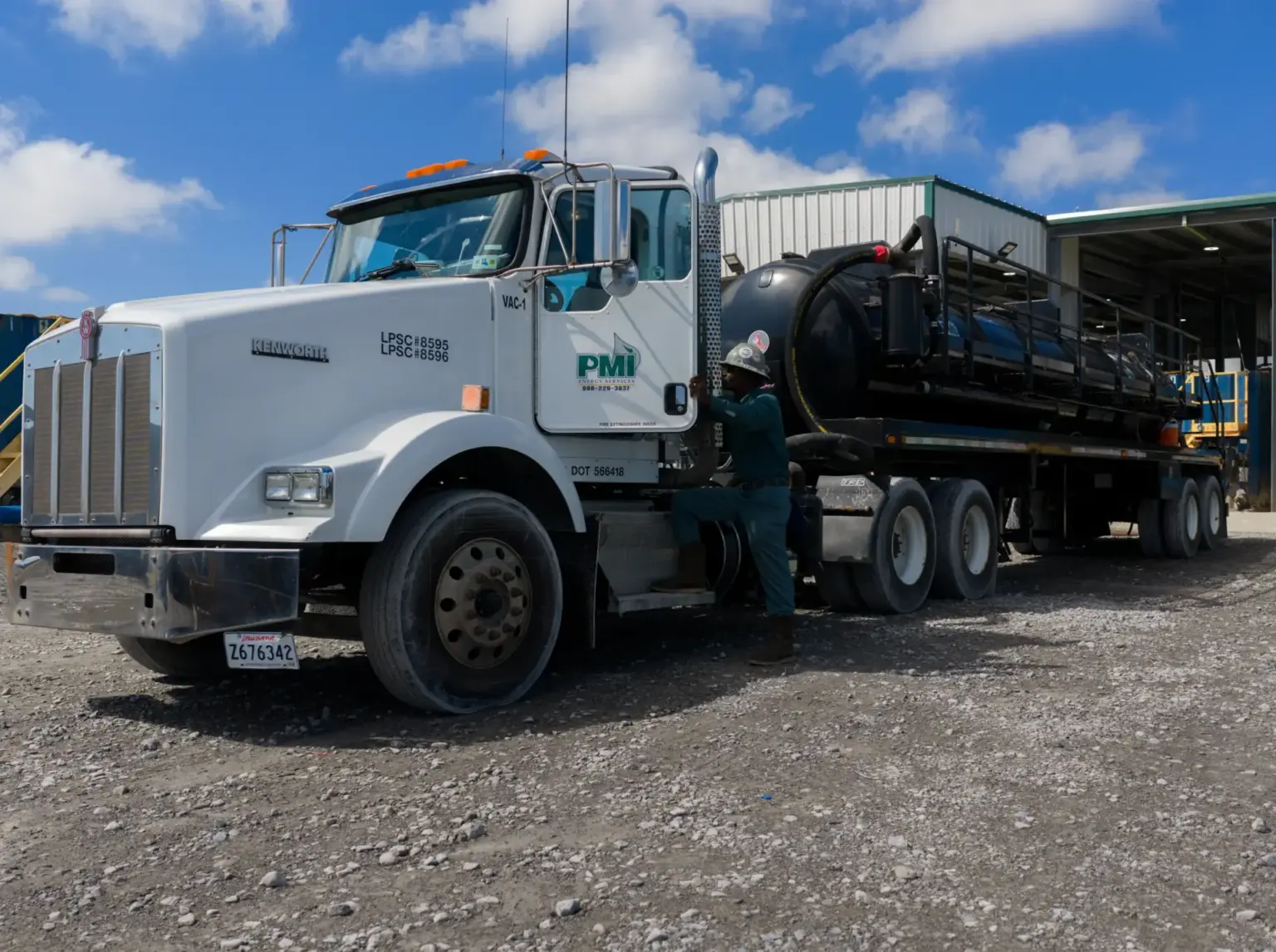
Automated & Conventional Tank Cleaning
Automation where confined-space entry is off the table. Cross-trained crews everywhere else.
PMI cleans storage tanks, vessels and marine tanks across the Gulf Coast and beyond, and crews mobilize in about 24 hours.
The record
- 15,000+OSVs and barges cleaned
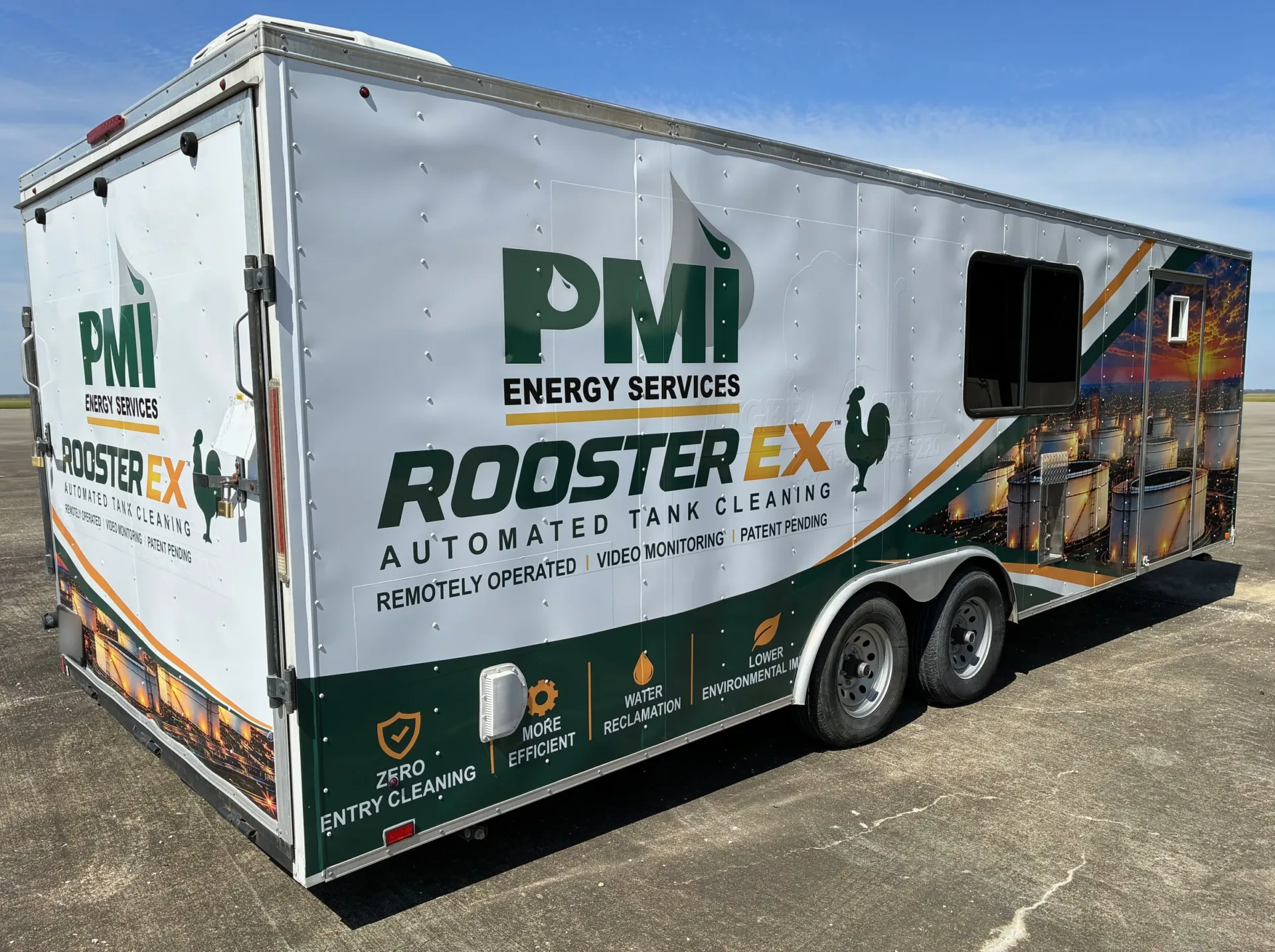
- 1,750+tanks cleaned by automation
- 75%+fewer personnel on site with automation
- 24 hrtypical mobilization
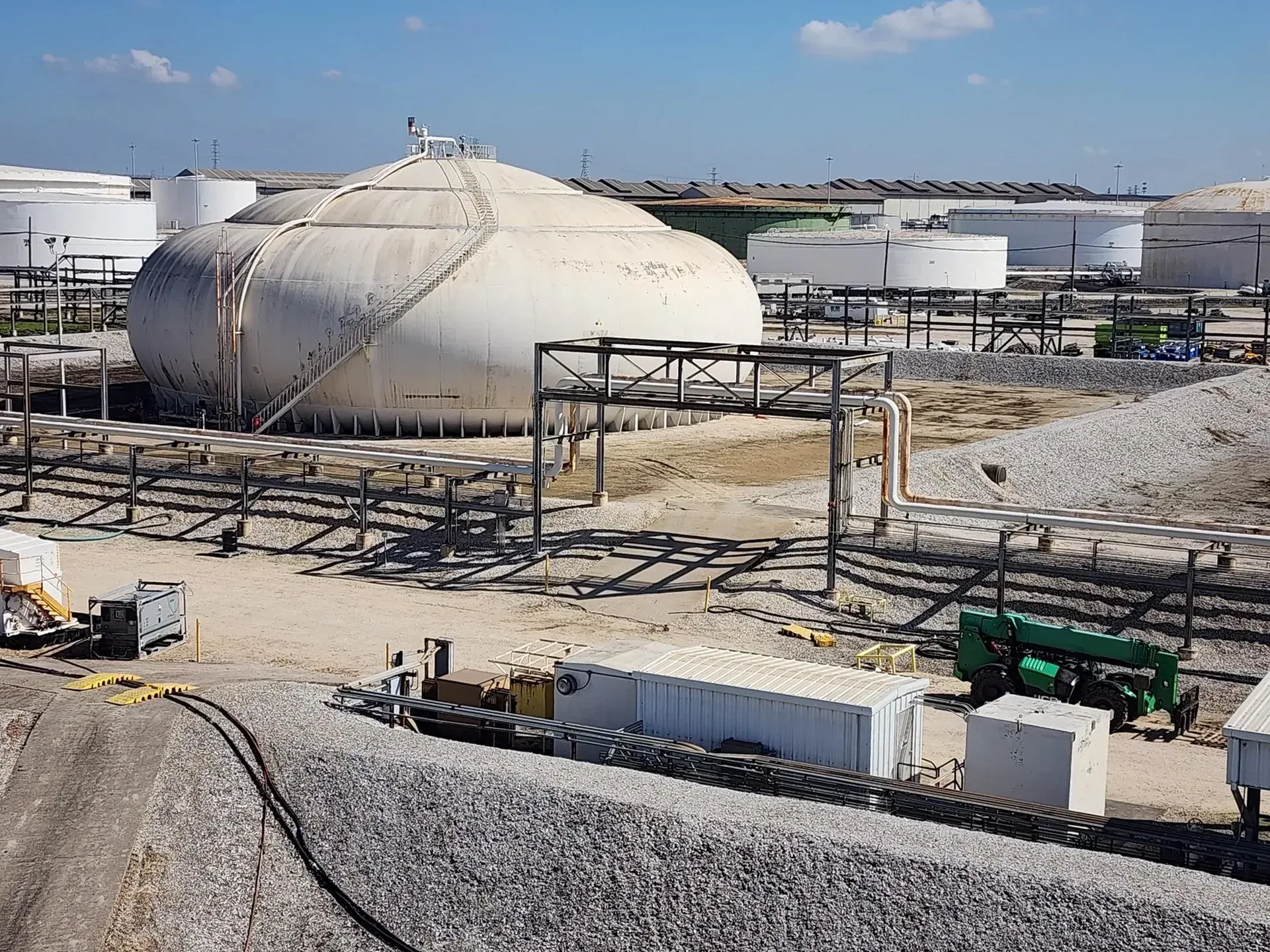
- 8.5M gallargest tanks cleaned to date
- 60-80cross-trained operators housed at Port Fourchon
The problems this ends
Heavy tank bottoms, paraffin, and thick viscous sludge that stall a conventional crew and blow out the schedule.
Confined-space entry risk: every man-hour inside the tank is exposure your HSE team has to own.
Turnarounds waiting on a cleaning vendor who cannot mobilize, or cannot staff the job.
Cleaning, ventilation, rescue, scaffolding, and waste scattered across four vendors and four invoices.
New-vendor onboarding that takes longer than the cleaning itself.
Scope of work
What you get
The work covers OSV liquid mud and dry bulk tanks, CCUs and frac tanks, above ground storage tanks, crude storage, rig pits, barges, cooling towers, and process vessels.More than 15,000 OSVs and barges cleaned over two decades, over 1,750 of them with our RoosterEX and MudHog automated systems. Crews scale from 2 to 12 or more, and can pull from the 60 to 80 cross-trained operators we house at Port Fourchon.
Watch it run
OSV liquid mud & dry bulk tanks
Get your offshore vessel cleaned at one of our two Fourchon yards, equipped with 4 dedicated OSV cleaning stations capable of handling four vessels at once, or we can mobilize to you.
CCU & frac tank cleaning
Our automated CCU cleaning unit handles cargo carrying units, cuttings boxes, rental equipment, marine portable tanks (MPTs) and frac tanks, and returns them faster than conventional cleaning to get the asset off rent for you or ready for the next job.
AST & terminal tank cleaning
Above ground storage tanks from 5,700 gallon specialty vessels to 300 foot diameter fuel tanks capable of holding 34 million gallons.
Crude storage & heavy bottoms
Automated removal of heel, paraffin, and viscous sludge where entry is prohibited or conventional cleaning is simply slower than our automation.
Drilling rig & rig pit cleaning
5,700+ platforms and 346 rigs and drillships serviced offshore and on land.
Barges & marine vessels
Barge tank cleaning with on-site EC-AOP wash water reclamation available on the same job.
Cooling towers, separators & process vessels
Entry and pressure-wash cleaning of separators, contact towers, and vessels, flushed and degassed and prepared for your inspection team.
General industrial cleaning
Process work areas, sumps, piping, and slab cleaning for full-site workscopes.
Isolation, ventilation & rescue
Lockout support, forced ventilation, and standby confined-space rescue crews on the same PMI ticket.
The procedure
How the job runs
The sequence below is the one our supervisors and crews work to on this scope. Readings, permits and sign-offs are documented as the job moves through it.
Before we arrive
We send the facility a current training matrix and personnel mobilization forms. Once your side approves the people, every work group and vendor attends your facility orientation, and we hold a pre-job meeting at the tank with everyone who will be involved. JSAs are written and reviewed for equipment inspection, equipment setup, de-inventory of remaining waste and the isolation work. All equipment is grounded and function tested before first use.
Isolation
Double block and bleed per the isolation plan, blinds and skillets installed under lockout and tagout. Isolation is verified by every work group involved and re-verified with your assigned personnel, then personnel locks go on.
Positive isolation
Spill containment goes in before any flange is broken: containment pans under every break point, berms and absorbent staged. Tags are ready before the blinds and skillets go in. Rigging, mechanical devices and straps are inspected and the load weight verified before anything is moved.
Flood to water-draw height
Water goes in through the tank's 2-inch water-draw connection, or through a top connection installed under supplied air, using a 2-inch diaphragm pump. At height we stop and pump down to the oil water separator, which holds 1,000 gallons and handles a minimum of 50 GPM.
Top manway wash
Nozzles go into the tank through the 20-inch top manway with the manway sealed off, crews on supplied breathing air. Material is pumped down from the water draw to the waste frac tank.
Degassing
A third party mobilizes a direct-fire thermal oxidizer for vapor control, connected to a top flange with a knock-out pot in line so no liquid can reach it, on its own generator. Inlet and outlet VOC and LEL readings are taken every 30 minutes and logged, and the tank LEL is checked throughout. Degassing is complete when the reading is confirmed under 5 percent LEL.
Non-entry purging
Once LEL is under 50 percent, nozzles go in at the bottom manway under supplied air to help the degassing along and move sediment. The waste is liquefied so it can be pulled out and discharged to the waste frac tank. Crews remove what they can reach without breaking the plane of entry.
Ventilation
A 20-inch blower goes on the top manway opening and pulls outside air in through the bottom opening, flushing the remaining vapor out the top.
Bottom manway cleaning, from outside the tank
The confined space entry permit is completed, the blower is shut down, and the supervisor tests the atmosphere through the bottom manway with a gas monitor. Results are documented and the blower restarts. Personnel working the opening are on supplied air with full body harness and protective clothing, and monitoring is continuous. Waste near the manway comes out with water pressure, vacuum, 6-foot aluminum squeegees and brass shovels.
Confined space entry
The supervisor walks the crew through the JSA and a detailed rescue plan, ventilation is shut down for an accurate atmospheric test, and the entry permit is completed. Entrants go in through the bottom manway on supplied air in full harness and protective clothing. A hole watch and rescue personnel stay stationed at the manway for the entire entry, the hole watch never leaves the post, and every entry and exit is logged. Sludge and solids come out with vacuum and washdown, walls and floor are cleaned with a hot or cold water blast unit, and cleaning height is no less than 3 feet and higher where what we see calls for it. The tank is washed with detergent, then you and PMI walk it together before anything is rigged down.
Disposal
All waste from the tank and from the cleaning goes into the frac tank. When it is ready to move, a vacuum truck is dispatched to your approved disposal site. Used PPE is drummed and goes the same way.
Demobilization
Both manways reinstalled, skillets removed and piping restored, personnel locks off, equipment rigged down, work area cleaned, trash and oily rags and absorbent pads in proper waste containers, and the area swept for debris.

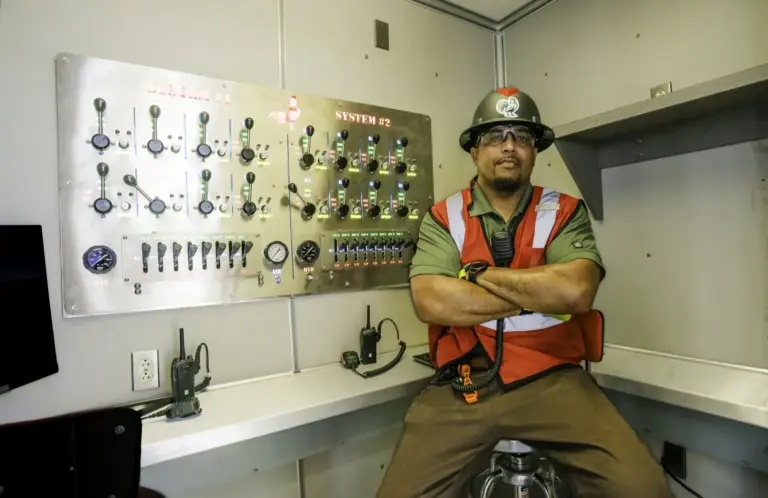

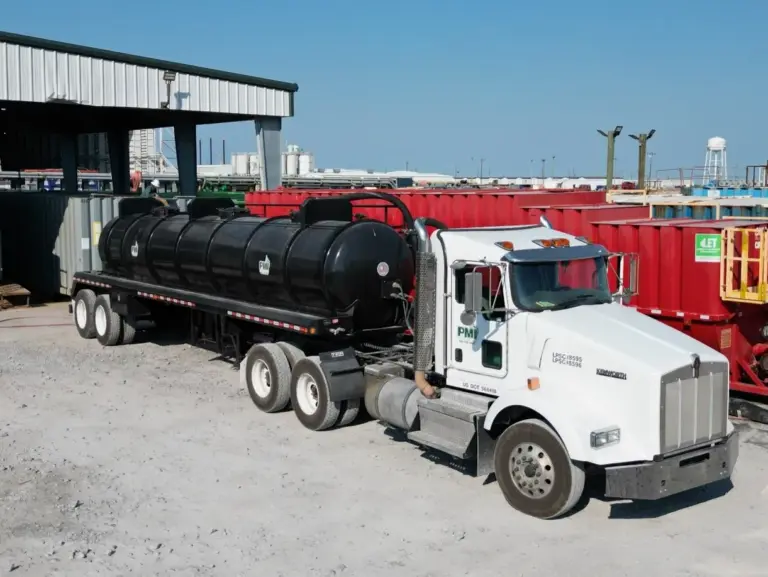
Equipment on this service
The technology doing the work
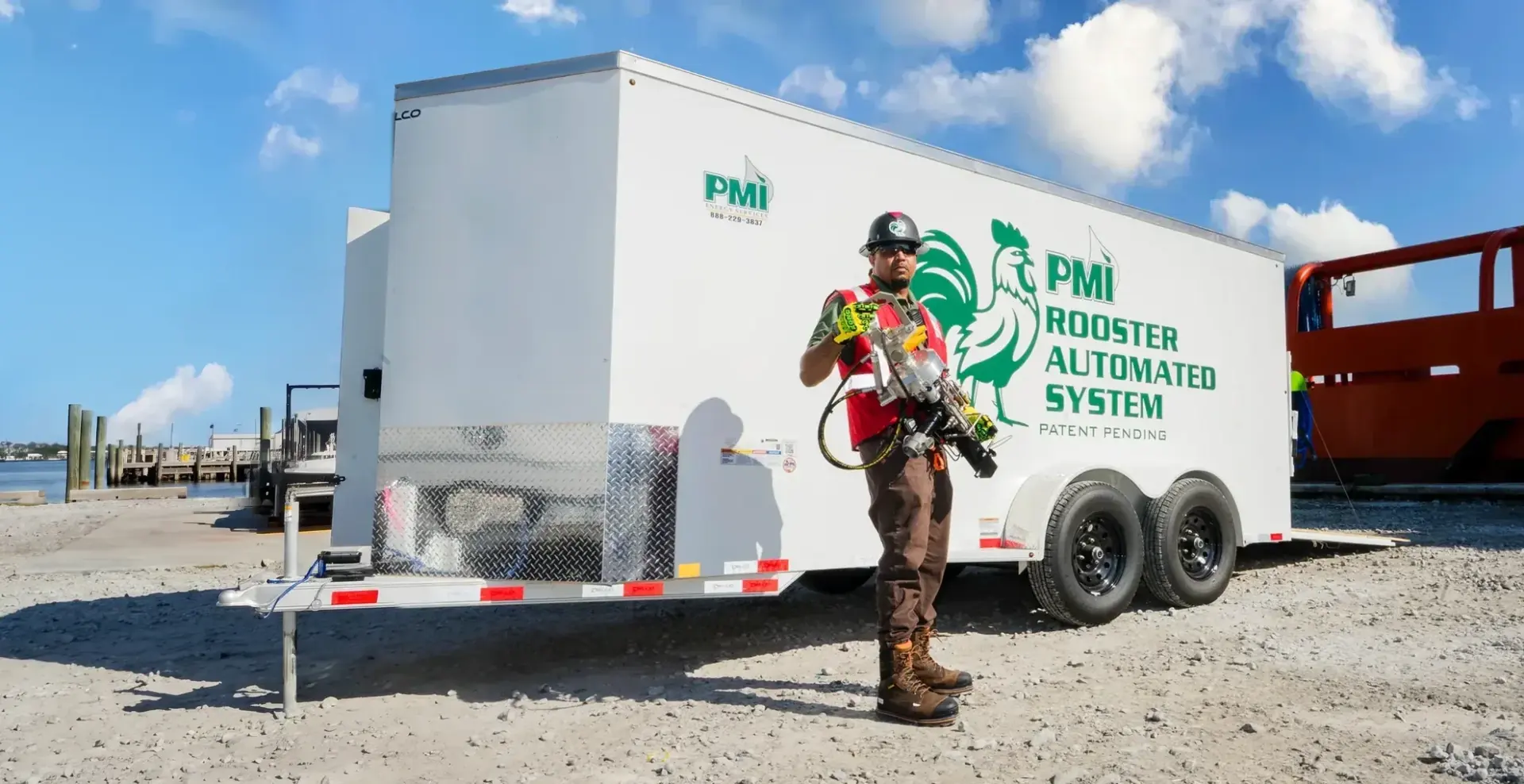
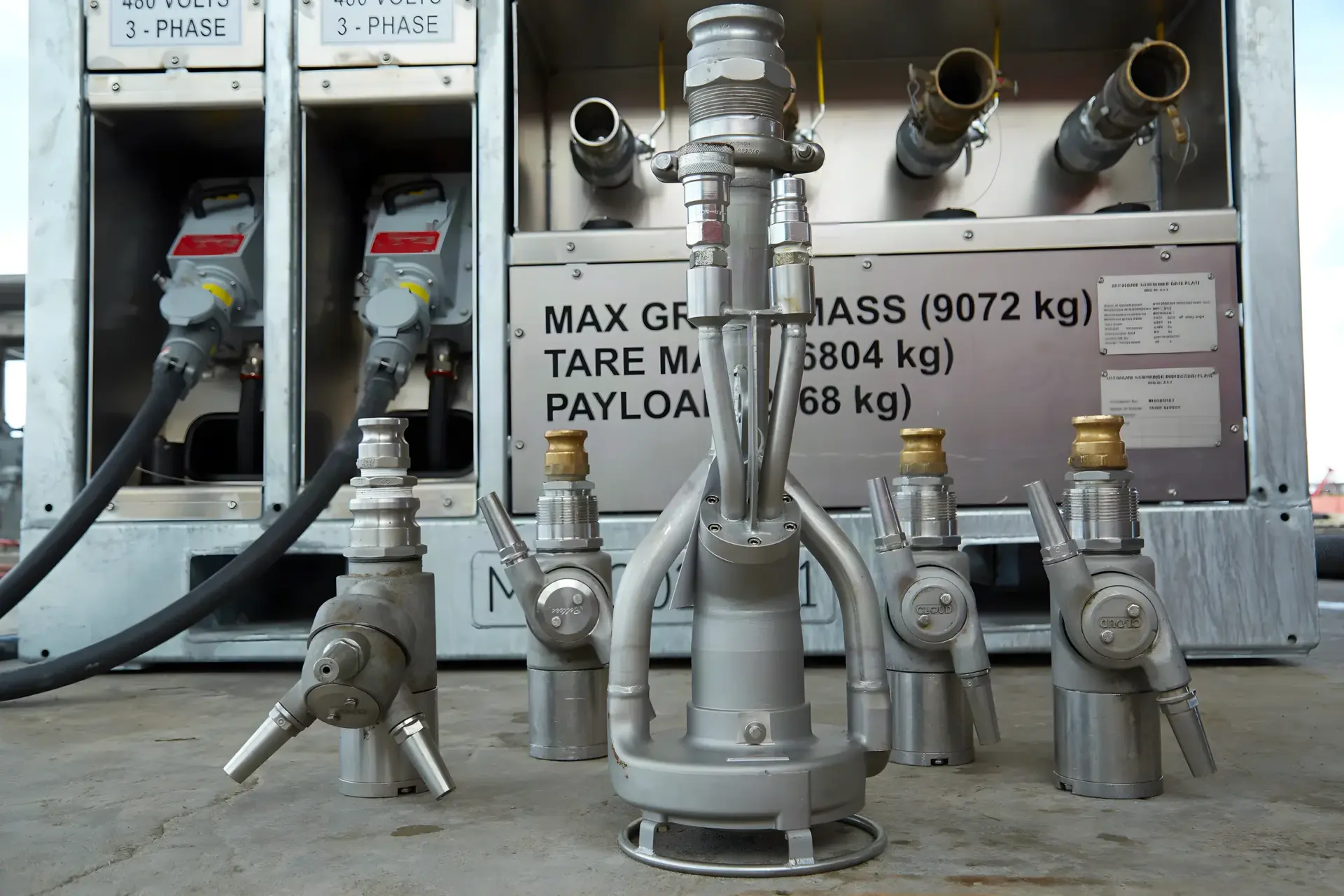
Questions we get
Automated & Conventional Tank Cleaning FAQs
When do you use automated tank cleaning instead of a conventional crew?
Automation runs the job when confined-space entry is prohibited, or when it is simply faster: heavy tank bottoms and heel, paraffin, thick viscous sludge, and crude oil tanks. The call comes down to tank size, the product being removed, and the tank's features. Everywhere else, a conventional crew does it with fewer rig-up hours.
How fast can PMI mobilize for a tank cleaning job?
Usually within 24 hours. Crews run from 2 to 12 or more, and because every PMI employee is cross trained, we can pull additional operators from the 60 to 80 we house at Port Fourchon.
Do you offer turnkey tank cleaning?
Yes. One number covers the cleaning, with ventilation and standby confined-space rescue on the same ticket. Scaffolding and waste transport are coordinated by PMI through licensed third parties and billed directly to you.
What does tank cleaning cost?
It depends on three things: tank size, the product, and how much remains in the tank after pump-off. Tell us those three and we can put a real number on it, including a turnkey all-in price if you want one.
How long does a tank cleaning take?
From a few days to several weeks, driven by tank size, the volume and makeup of the product, and crew size. Automation shortens the schedule by cutting personnel on site by more than 75 percent.
We don't have an MSA with PMI. How long does onboarding take?
We return the documentation your procurement team needs within 24 hours, and in many cases we can start sooner under an existing agreement with one of our sister companies.
Do you provide ventilation?
Yes. Forced ventilation is part of our standard tank cleaning scope.
Do you offer coating or inspection services?
No. We clean tanks and prepare them for inspection, and we work alongside your coating and inspection contractors, but we do not perform either service ourselves.
Where is PMI located?
Morgan City and Port Fourchon, Louisiana, with support locations across the United States. Recent tank cleaning projects have run in Louisiana, Texas, Mississippi, and Illinois.
Can you handle waste disposal?
We coordinate licensed third-party waste transport and disposal as part of the job, billed directly to you. Our EC-AOP water reclamation can also cut the disposal volume itself: on a typical project, 95 to 97 percent of wash water is recycled instead of trucked.
Tell us about the tank.
Send the tank size, the product, and your window. We'll come back with an approach, a crew, and a number, usually within a day.