Drilling Rig Cleaning
A clean rig, clean mud pits, less downtime, done right.
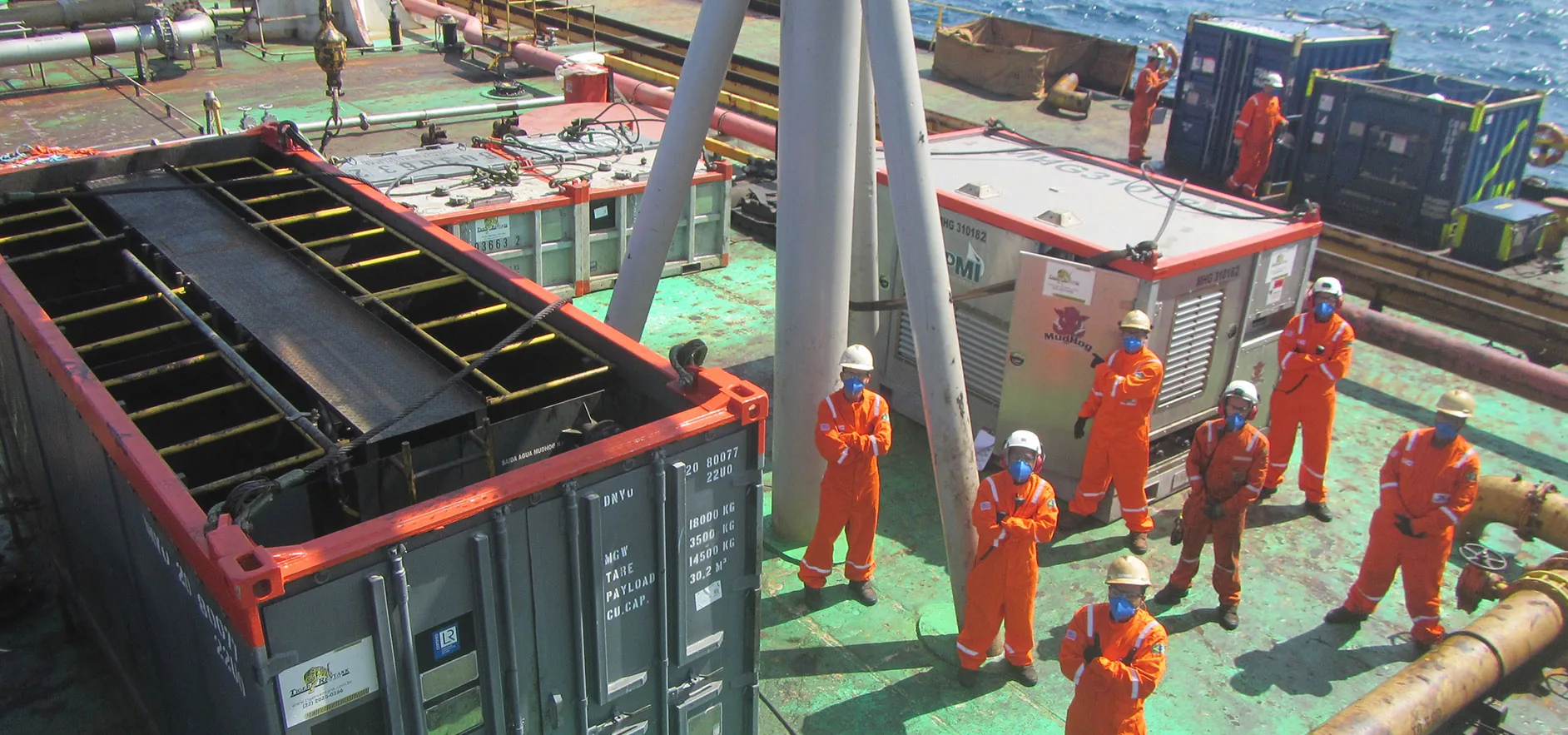
PMI cleans the rig, mud pits, shakers, rig floor and any other areas where needed, plus the mud tanks on the supply vessels that serve the rig, conventionally or with automated equipment. Less downtime for the rig, less time in port for the boat.
The record
- 4 ftof bottom solids washed out of a 750-barrel tank in 40 minutes by MudHog, with no tank entry (Midland pilot)
- 10.5 ftof 11 ft of sediment removed from a 1,000-barrel tank in 4 hours by MudHog, with no tank entry (Midland pilot)
The problems this ends
A rig paying day rate while its mud tanks get cleaned out by hand.
Demobilization held up because the mud system still has to be cleaned before the rig moves.
Crews spending hours inside mud tanks with shovels and hoses.
Wash water piling up faster than the solids it takes out, and all of it has to be hauled.
Containerization and disposal costs, and the liability that rides on every load.
A supply vessel held at the dock waiting on its mud tanks.
Barite and cement caked in dry bulk tanks, and nobody wants to shovel it out.
Scope of work
What you get
Our automated tank cleaning cuts the man-hours crews spend in confined spaces, uses less wash water and leaves less waste to handle and dispose of.Our Rig Cleaning System, conventional or automated, is built to lower rig costs by cutting downtime and speeding up demobilization, with lower containerization and disposal cost and less liability. We also clean barite and cement out of dry bulk tanks with mobile air movers, and rent the cuttings boxes, pressure washers, pumps and hoses a rig crew needs.
Rig liquid mud systems
Mud tanks and the liquid mud system on the rig, cleaned conventionally or with automated equipment.
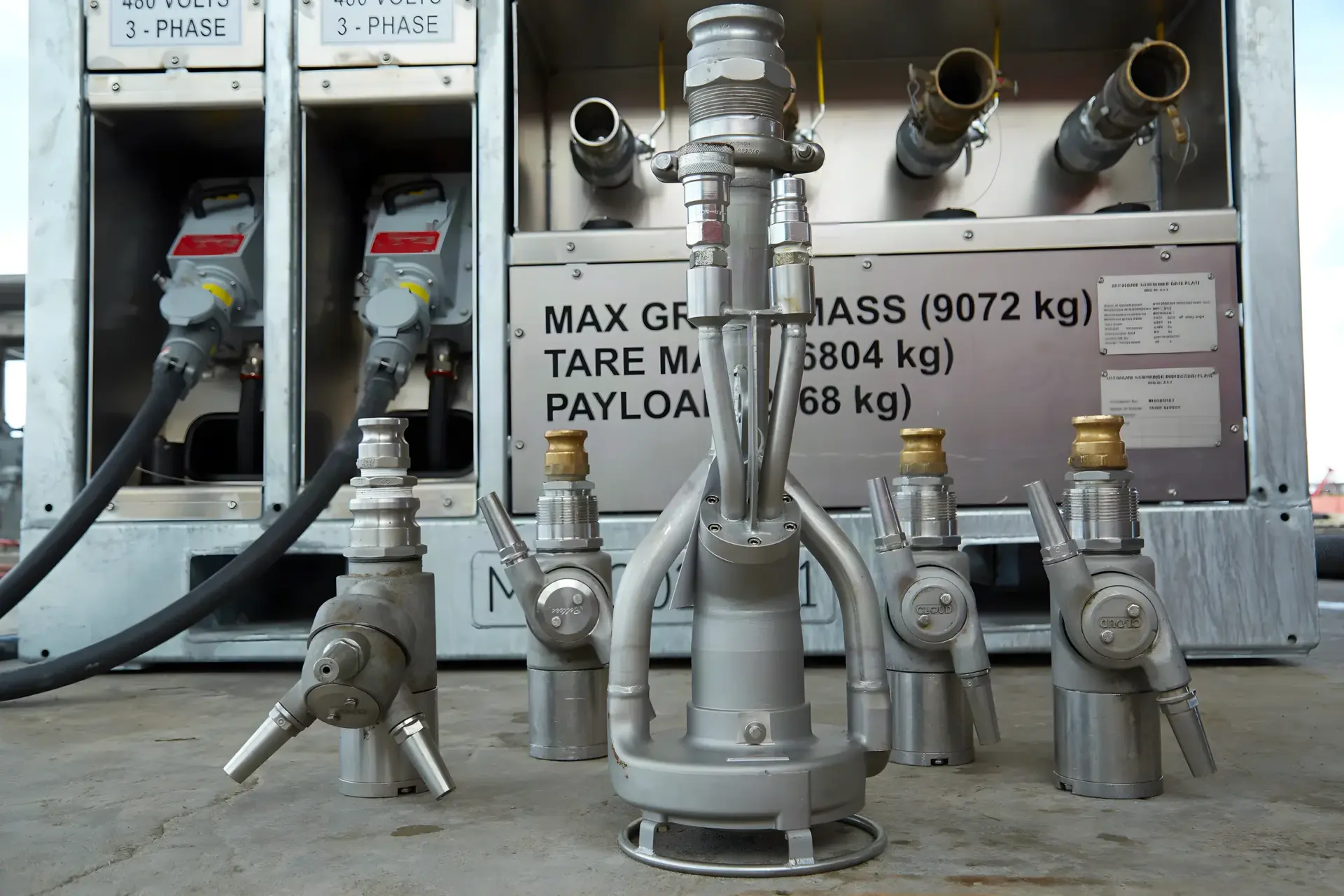
MudHog automated tank cleaning
Automated washing for mud tanks on rigs and on marine supply vessels, with fewer man-hours in confined spaces, less wash water and less waste to dispose of.
Rig Cleaning System
Conventional and automated rig cleaning built to cut downtime and speed rig demobilization.
Supply vessel mud tanks
Liquid mud tanks on the marine supply vessels that serve the rig, cleaned to shorten the boat's time in port.
Dry bulk tank cleaning
Barite and cement vacuumed out of dry bulk tanks by mobile air movers with filtration and sound suppression. Some of our units discharge straight into supersacks or vacuum boxes, with no augering, dumping or shoveling.
Equipment rentals
Cuttings boxes, pressure washers, pumps and hoses for your own crew.
Waste handling and manifests
We handle the waste that comes out of the job and the manifests for what we haul.
Questions we get
Drilling Rig Cleaning FAQs
Can you clean the mud system without putting a crew in the tanks?
Our MudHog automated tank cleaning and the automated side of our Rig Cleaning System are built to cut the man-hours crews spend in confined spaces. When a tank still needs entry, our crews are trained in confined space entry and rescue.
How does automated cleaning lower the cost of a rig job?
It cuts downtime and speeds up demobilization, uses less wash water, and leaves less waste to containerize and dispose of. Less waste also means less liability riding on every load.
Do you clean the supply vessels' mud tanks as well?
Yes. MudHog cleans liquid mud tanks on marine supply vessels too, which shortens the boat's time in port. See our OSV tank cleaning service for the dockside side of that work.
Can you clean dry bulk tanks?
Yes. Mobile air movers with vacuum and filtration pull barite and cement out of dry bulk tanks, with sound suppression for the crew nearby. Some of our units discharge straight into supersacks or vacuum boxes, with no augering, dumping or shoveling.
Do you rent equipment?
Yes. We rent cuttings boxes, pressure washers, pumps and hoses.
Where do you work?
Offshore in the Gulf of America, along the coastal and onshore Gulf Coast, and in the Mid-Continent.
Who takes care of the waste?
We do. We handle the waste that comes out of the job and the manifests for what we haul.
Tell us about the rig.
Send the rig location, the tanks and systems that need cleaning, what they held and when the rig has to move. We will plan the job around it.